If you live in Los Angeles — especially in the San Fernando Valley — your HVAC system works harder and longer than almost anywhere else in the country. Summers stretch well into October. Santa Ana winds push dust and debris into every outdoor unit. Wildfire seasons coat filters in ash and fine particles. And when temperatures hit 105°F in Woodland Hills or Chatsworth, the last thing you can afford is a system breakdown.
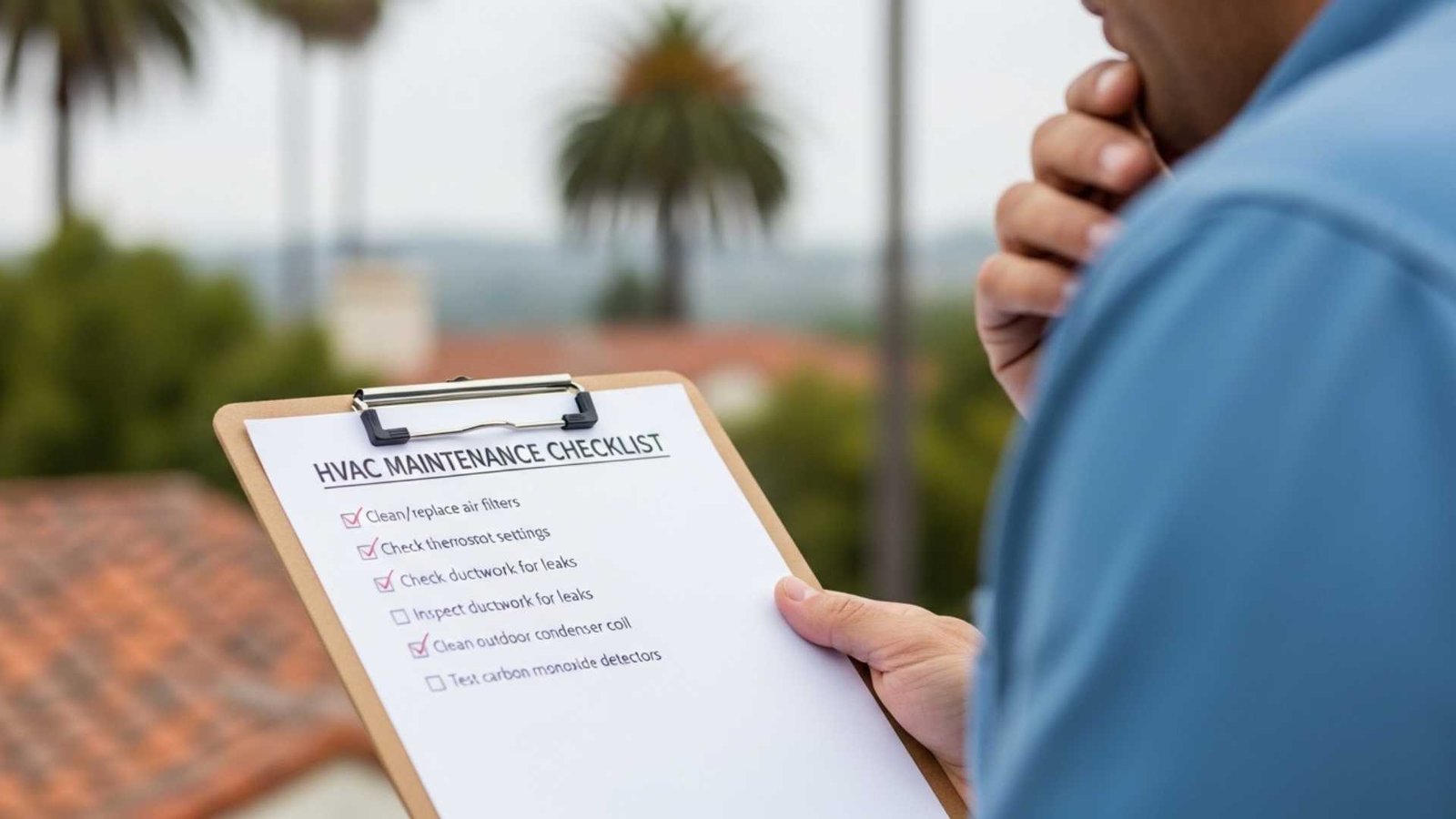
The difference between an AC system that lasts 8 years and one that lasts 18 years almost always comes down to maintenance. This checklist covers everything an LA homeowner should be doing — monthly, seasonally, and annually — to keep their heating and cooling system running at peak performance, lower energy bills, and avoid expensive emergency repairs.
Cooling By Design serves homeowners across Canoga Park, Woodland Hills, West Hills, Chatsworth, Reseda, Northridge, Granada Hills, Porter Ranch, Tarzana, Encino, Sherman Oaks, Winnetka, Calabasas, and Van Nuys. If you would rather hand this checklist off to a professional, our HVAC maintenance plans cover all of it on a scheduled basis — so nothing slips through the cracks.
Why HVAC Maintenance Matters More in Los Angeles
Most HVAC maintenance guides are written for the national average — a climate with cold winters, moderate summers, and four distinct seasons. Los Angeles is different in almost every way that affects HVAC performance:
- Longer cooling seasons — AC systems in the San Fernando Valley run 8 to 10 months per year, compared to 3 to 4 months in most of the country
- Higher dust and particulate load — dry winds, local wildfires, and urban pollution clog filters and coat coils faster than humid climates
- Extreme peak temperatures — systems in Northridge, Chatsworth, and West Hills regularly face days above 100°F, which pushes equipment to its thermal limits
- Hard water — LA’s hard water accelerates mineral buildup in condensate drain lines and humidifier components
These factors mean the standard “change your filter every 90 days” advice simply does not apply here. LA homeowners need a more frequent, more thorough maintenance routine.
Monthly HVAC Maintenance Checklist
Check and Replace the Air Filter
In Los Angeles, monthly filter checks are non-negotiable. Hold your current filter up to a light source. If light cannot pass through it clearly, replace it immediately. For most LA homes, this means a new filter every 30 to 45 days during peak cooling season — not the 90-day interval printed on most filter packaging.
Homes with dogs, cats, multiple occupants, or anyone with allergies or asthma should use a MERV-8 or MERV-11 rated filter and check it every three weeks. A clogged filter is the single most common cause of reduced cooling performance, frozen coils, and premature system failure.
Listen and Observe Your System
Once a month, stand near your indoor air handler and outdoor condenser while the system is running and listen carefully. Your system should run with a consistent, low hum. Any of the following sounds are early warning signs that something needs attention:
- Clicking or ticking at startup or shutdown — often a failing capacitor or relay
- Hissing or bubbling — frequently indicates a refrigerant leak
- Banging or rattling — loose components, debris in the blower, or a failing motor
- Squealing — worn blower belt or bearings in need of lubrication
Catching these sounds early almost always means a minor repair. Ignoring them often leads to a full breakdown during the hottest days of the year.
Check Thermostat Settings and Performance
Verify your thermostat is set correctly for the current season and that the system reaches the target temperature within a reasonable time. If your home takes more than 30 minutes to drop 2°F on a hot day, the system is working harder than it should — a sign that maintenance or diagnostics are needed.
Seasonal HVAC Maintenance Checklist
Spring (March – May) — Pre-Cooling Season Prep
Spring is the most important maintenance window of the year for LA homeowners. Getting your system serviced before June heat arrives means you are not scrambling for a technician during peak demand season when wait times are longest.
Schedule a Professional AC Tune-Up
A professional spring tune-up from Cooling By Design’s AC service team covers the following:
- Refrigerant level check and leak inspection
- Evaporator and condenser coil cleaning
- Electrical connection inspection and tightening
- Capacitor and contactor testing
- Blower motor and belt inspection
- Thermostat calibration
- Condensate drain flush and treatment
- Overall system performance test
This single visit can add years to your system’s life and prevent 80% of common summer breakdowns.
Clean the Outdoor Condenser Unit
After winter and spring wind seasons, your outdoor condenser is likely coated in dust, cottonwood, pollen, and debris. Clear all vegetation to at least 2 feet on every side. Gently rinse the condenser fins with a garden hose — spraying from the inside out — to remove buildup. Never use a pressure washer as it bends the delicate aluminum fins and reduces airflow permanently.
Inspect and Clear the Condensate Drain Line
Your AC removes humidity from indoor air and drains that moisture through a condensate line. In LA homes, these lines frequently develop algae, mold, and mineral deposits that cause clogs — leading to water overflow, ceiling damage, and system shutdowns. Pour a cup of diluted white vinegar or condensate drain treatment into the access point near your indoor unit to keep the line clear.
Test All Vents and Registers
Walk through every room of your home and confirm all supply and return vents are open, unobstructed, and blowing air. Furniture pushed against return vents is one of the most overlooked causes of poor system performance and uneven temperatures across homes in Encino, Sherman Oaks, and Tarzana.
Summer (June – September) — Peak Performance Monitoring
Check the Filter Every 30 Days Without Fail
During summer, your system runs nearly continuously. Filter checks every 30 days are mandatory. In homes near dry hillsides — particularly in Chatsworth, Granada Hills, and Porter Ranch — dusty air during heat events can clog a filter in under three weeks.
Monitor Your Energy Bill
A sudden increase in your electricity bill — without a change in usage habits or utility rates — almost always means your HVAC system is working harder than it should. Common causes include dirty coils, low refrigerant, duct leaks, or a failing compressor. If your bill spikes more than 15% unexpectedly, schedule a diagnostic visit before the problem escalates.
Keep the Condenser Area Clear
Through summer, grass and landscaping grow quickly. Check monthly that your outdoor unit has at least 2 feet of clearance and is not being shaded in a way that traps heat around the unit. While shade can slightly reduce peak temperatures, dense vegetation that blocks airflow does far more harm than good.
Fall (October – November) — Heating System Prep
Schedule a Heating System Inspection
Before the first cold nights arrive — which in the San Fernando Valley can come suddenly in November — have your furnace or heat pump inspected and serviced. Our heating service team covers burner cleaning, heat exchanger inspection, igniter testing, and safety control verification to make sure your system is ready for the season.
This is especially important for gas furnaces. A cracked heat exchanger — invisible to the naked eye — can allow carbon monoxide to enter your home’s air supply. Annual inspection is the only reliable way to detect this.
Test Carbon Monoxide and Smoke Detectors
Replace batteries in all CO and smoke detectors when you switch your thermostat from cooling to heating mode. If your CO detector is over 7 years old, replace the unit entirely — the sensors degrade over time regardless of battery freshness.
Check Weatherstripping and Insulation
Poor insulation and air sealing around doors and windows forces your HVAC system to work harder to maintain set temperatures. Fall is the ideal time to inspect and replace worn weatherstripping, seal gaps around window frames, and evaluate attic insulation. Our insulation service helps LA homeowners dramatically reduce energy loss and improve year-round comfort.
Winter (December – February) — Off-Season Care
Keep Running Your Heating System Efficiently
LA winters are mild but real — especially overnight in Northridge, West Hills, and Calabasas, where temperatures regularly drop into the low 40s. Run your heating system at a consistent temperature rather than turning it on and off sharply. Dramatic temperature swings put more stress on components than steady operation.
Check the Outdoor Unit After Heavy Rain
After winter storms, inspect your outdoor condenser for debris — leaves, branches, and standing water around the base. While modern condenser units are designed to handle rain, accumulation of organic debris against the unit can cause corrosion and restrict airflow over time.
Do Not Cover Your Condenser Unit
Many homeowners cover their outdoor unit in winter thinking it protects the system. This is generally not recommended in LA’s mild climate — covers trap moisture and create a home for rodents that can chew through wiring. If you do use a cover, use a breathable mesh design rather than a solid vinyl cover, and remove it completely before running the system in spring.
Annual HVAC Maintenance Checklist — Professional Tasks
Some maintenance tasks should only be performed by a licensed HVAC technician. Schedule these annually — ideally during your spring tune-up visit:
- Refrigerant level measurement — verifies no slow leaks have developed over the past year
- Coil cleaning — both evaporator (indoor) and condenser (outdoor) coils need professional cleaning to maintain efficiency
- Electrical component testing — capacitors, contactors, and relays degrade over time and should be tested for output values, not just visual inspection
- Duct inspection — a full duct pressure test every 3 to 5 years identifies leaks costing you 20 to 30 percent of conditioned air. Our ductwork service handles full testing and sealing
- Blower wheel cleaning — dust buildup on the blower wheel reduces airflow significantly and increases motor strain
- Gas pressure and combustion analysis — for homes with gas furnaces, verifies safe and efficient combustion
- System performance documentation — a good technician records supply and return temperatures, static pressure, and refrigerant pressures each year so you have a performance baseline to detect gradual decline
Signs Your HVAC System Needs Immediate Attention
No maintenance checklist replaces knowing when something is wrong right now. Call a technician without delay if you notice any of the following:
- Ice forming on the indoor unit or refrigerant lines
- Water leaking or pooling near the indoor air handler
- Burning, musty, or sulfur-like odors coming from vents
- System cycling on and off every few minutes (short cycling)
- Rooms that are consistently much hotter or colder than others
- Electricity bill increases of 20% or more without a clear cause
- The system runs continuously without reaching the thermostat set point
These are not issues to monitor over a few weeks. Each one can rapidly escalate into a full system failure or a safety hazard — particularly the odor warnings, which can indicate electrical burning or a gas issue.
The Easiest Way To Stay on Top of HVAC Maintenance in LA
For most homeowners in Canoga Park, Woodland Hills, Reseda, and across our service area, the challenge is not knowing what to do — it is remembering to do it during a busy year. That is exactly what our HVAC maintenance plans are designed for.
With a Cooling By Design maintenance plan, you get two professional visits per year — one before cooling season and one before heating season — covering every item on the annual professional checklist above. You also get priority scheduling, discounts on any repairs needed, and the peace of mind that your system is being monitored by certified technicians who know LA’s climate and your specific equipment.
Our financing options make it easy to get started without upfront pressure. And if it turns out your system needs repair or replacement during a maintenance visit, you will always get a straight, honest assessment — not an upsell.
Frequently Asked Questions
How often should I service my HVAC system in Los Angeles?
Twice per year — once in spring before cooling season and once in fall before heating season. LA’s long cooling season and high dust load make bi-annual professional servicing essential to maintain efficiency and avoid breakdowns.
How often should I change my air filter in LA?
Every 30 to 45 days during peak cooling season (June through October). Homes with pets, allergy sufferers, or homes near dry hillsides may need filter changes every 3 weeks during heat events and wildfire season.
What happens if I skip HVAC maintenance?
Skipping maintenance leads to reduced efficiency (higher bills), shorter system lifespan, higher likelihood of emergency breakdowns, and in the case of gas furnaces, potential safety risks from undetected heat exchanger cracks. Most HVAC warranties also require documented annual maintenance to remain valid.
Do you offer maintenance plans in Woodland Hills, Chatsworth, and Reseda?
Yes. Cooling By Design’s maintenance plans cover our full service area — including Canoga Park, Woodland Hills, West Hills, Chatsworth, Reseda, Northridge, Granada Hills, Porter Ranch, Tarzana, Encino, Sherman Oaks, Winnetka, Calabasas, and Van Nuys. View our maintenance plan options here.
Can I do HVAC maintenance myself?
Homeowners can and should handle filter changes, condenser clearing, vent checks, and thermostat monitoring. Everything involving refrigerant, electrical components, coil cleaning, and combustion analysis must be performed by a licensed technician. Attempting these without proper certification is unsafe and can void your system warranty.
Keep Your System Running — Schedule Your Maintenance Visit Today
A well-maintained HVAC system in Los Angeles lasts longer, costs less to run, and almost never fails when you need it most. Whether you want to start a maintenance plan, book a one-time tune-up, or get a professional opinion on your current system’s condition — Cooling By Design is ready to help.
We are locally based in Canoga Park (21201 Victory Blvd, Suite 125), licensed (License #1148982), fully insured, and 5-star rated across our service area. Call us at (877) 702-6654 or schedule online today.